![Retail customer engagement: The ultimate guide to growing your business in 2026 [5 real examples]](https://www.airship.com/wp-content/uploads/2026/06/Retail-customer-engagement-The-ultimate-guide-to-growing-your-business-in-2026-5-real-examples.png)
When product, growth, and marketing teams think of standard retail customer engagement, their mind goes to push notifications and emails. But the retail brands growing in 2026 are doing so much more than basic messaging — they’re orchestrating cross-channel experiences across not only push and email, but SMS, web, in-app, mobile wallet, and more.
In this guide, I start by providing an overview of retail customer engagement. Later, I introduce examples used by the world’s leading retail brands: Ulta Beauty, Ace Hardware, ASDA, Sally, and bol, who all use Airship to power their mobile-first customer experiences.
What is retail customer engagement?
Retail customer engagement is an overview of all the interactions shoppers have with retail brands, including both digital and physical channels. It includes basic activities, such as transactions and customer service, but also more advanced strategies that incorporate zero-party data, cross-channel orchestration, and hyperpersonalization.
Key components of retail customer engagement
- Cross-channel orchestration: Coordinating messaging across app, web, email, and SMS from a single platform keeps channels from competing for attention. It guides users to their preferred conversion destinations based on real-time behavior.
- Hyperpersonalization via zero-party data: Tailoring experiences using explicit preferences shared willingly by customers through in-app surveys and preference centers. This builds a relationship on trust rather than tracking pixels or behavioral guesswork.
- Mobile-first execution: Anchoring the retail strategy within a native app to utilize unique device capabilities like mobile wallets. Outbound channels function as pathways designed to drive users toward this high-conversion hub.
- Loyalty programs: Building sustainable purchasing habits by integrating membership rewards directly with mobile wallet solutions for friction-free access. Providing persistent value gives customers a clear reason to return to the app organically.
- Contextual experiences: Delivering relevant updates — such as cart reminders or localized store alerts — based on real-time consumer intent and explicit choice. Automation intelligence ensures messaging triggers only when a user is most likely to act.
Why you should center your retail customer engagement around mobile
Rather than treat mobile as just another channel, position it as the center of your retail customer experience strategy. Airship research shows that mobile is the highest-conversion channel for capturing long-term value and driving repeatable revenue:
- In-app experiences drive 3x more purchases for some retailers.
- Customers who receive in-app experiences purchase 3.2x more frequently.
- Brands generate 3.5x more revenue from app users compared to non-app users, and app customers spend an impressive 3.5x more over time.
Airship is the only customer experience platform designed chiefly for mobile-first customer experiences. It’s the exact reason why the world’s leading retail brands use Airship — because they know investing in mobile is the most effective way to increase customer lifetime value, retention, and revenue.
Find the right retail platform
Real examples of customer engagement activities in retail
The real examples below of retail customer engagement activities go beyond transactional push notifications. They intelligently orchestrate cross-channel experiences, capture and activate zero-party data, and funnel users into the app environment where loyalty lives.
Ulta Beauty
Challenge
Converting customers upon first arrival is not guaranteed because exploration is an important part of the beauty journey. The brand needed a custom method to capture customer insights — while delivering immediate value through tailored recommendations — but was restricted by limited survey capabilities.
Strategy
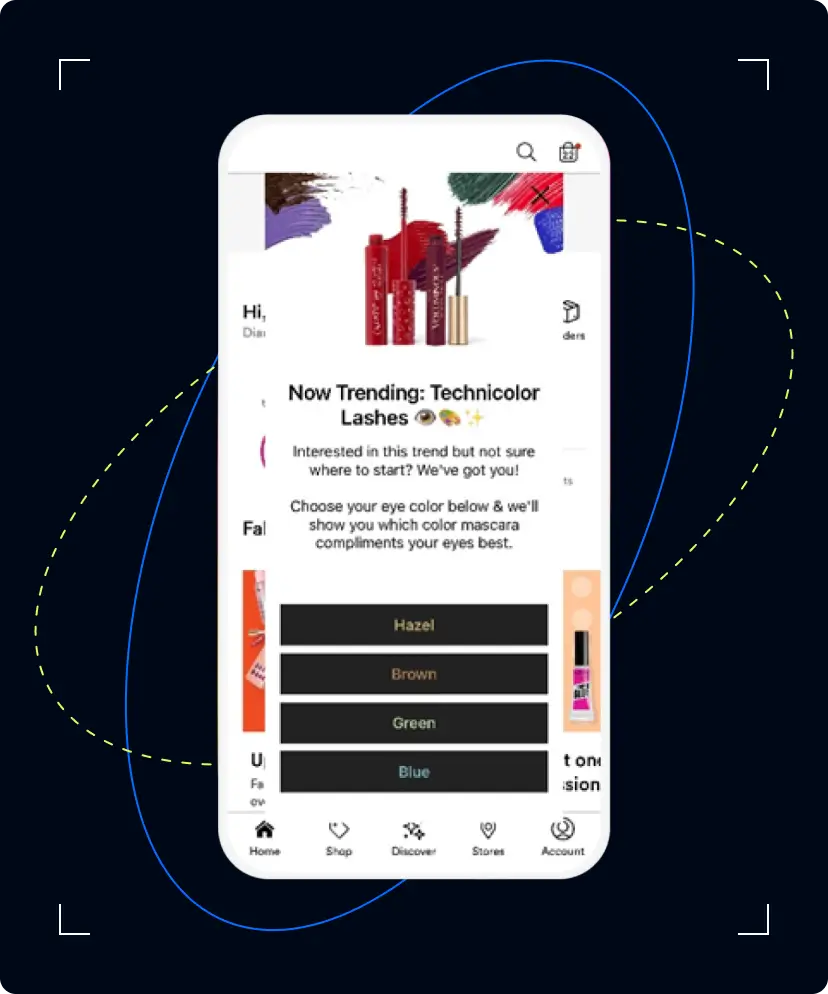
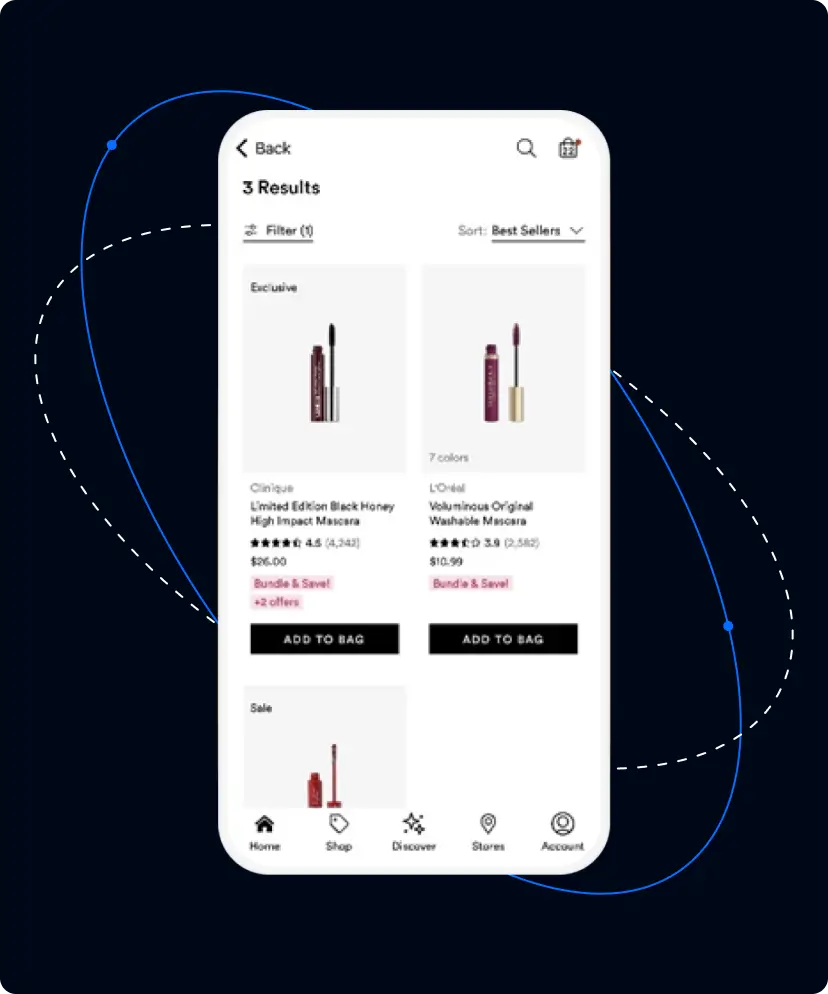
Using Airship, the team custom-built an in-app survey experience using buttons to capture real-time responses without developer support. Visitors selected their eye color to discover the ideal matching mascara, which then routed them to a customized landing page.
- Profile tagging: Responses were automatically appended to customer profiles using tags for future targeting efforts.
- Controlled delivery: The experience utilized rich imagery and interactive features, with delivery parameters set to display the survey only once per customer during a single week.
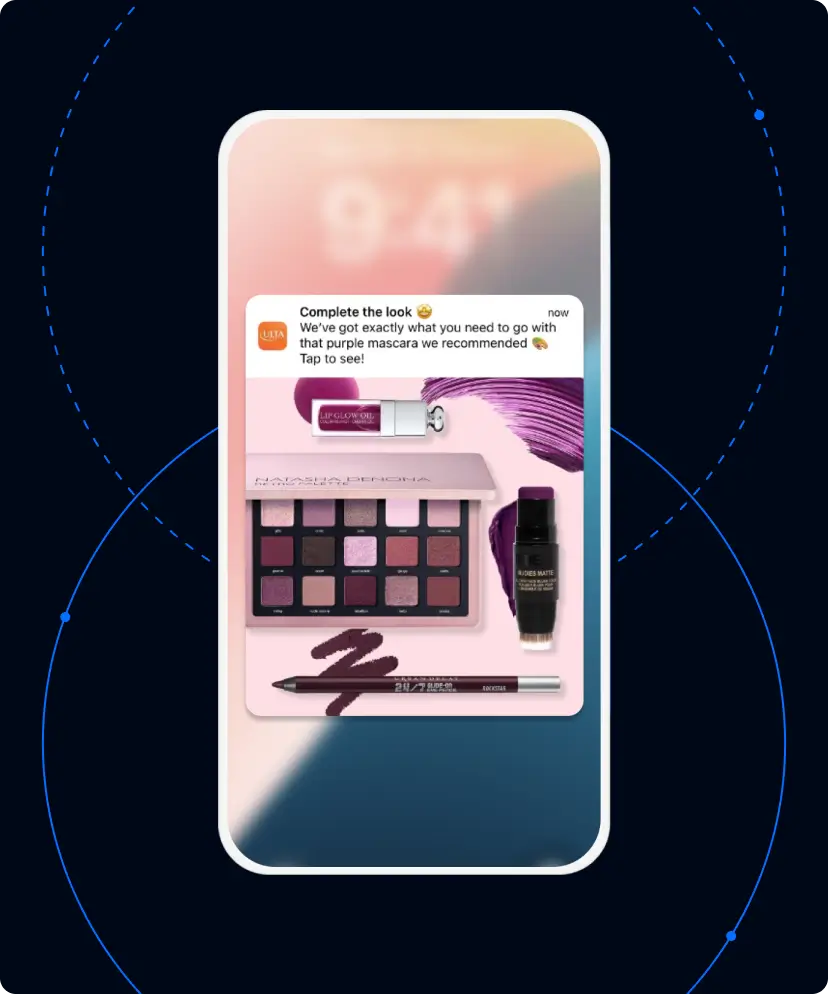
- Orchestrated retargeting: Six weeks after survey completion, the brand sent push notifications and in-app Message Center alerts prompting shoppers to complete the look with products matching their stated preferences.
Results
- Higher conversion rates: The campaign drove a 2.8x higher purchase conversion rate among guests exposed to the in-app experience compared to those who were not.
- Guest participation: The survey achieved a 7% cumulative response rate.
- Zero-party data collection: The brand successfully gathered explicit preferences from over 825K guests.
Ace Hardware
Challenge
Ace Hardware needed to transform its mobile app from a basic utility into a digital destination that mirrored its neighborhood store experience. The team required a solution that allowed marketing to deploy campaigns quickly without relying heavily on IT resources.
Strategy
The brand used Airship to scale growth experiments, gather customer preferences, and launch targeted re-engagement campaigns within the app.
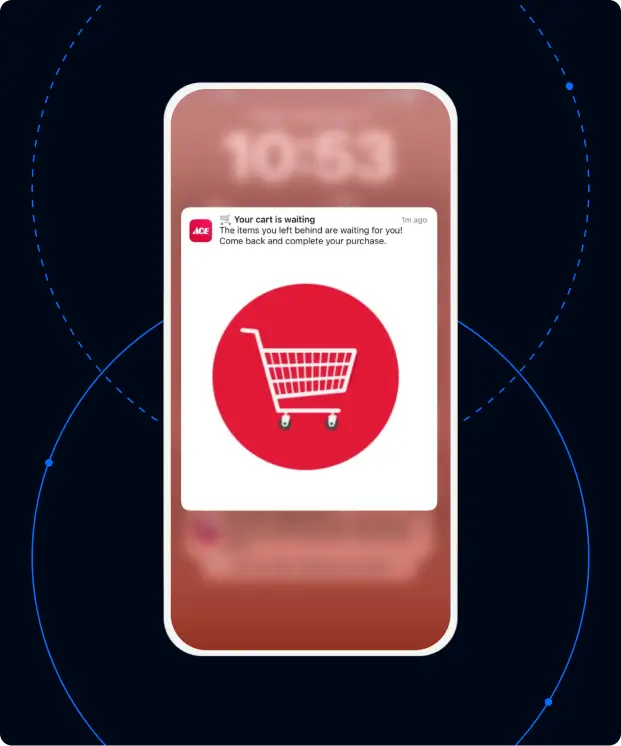
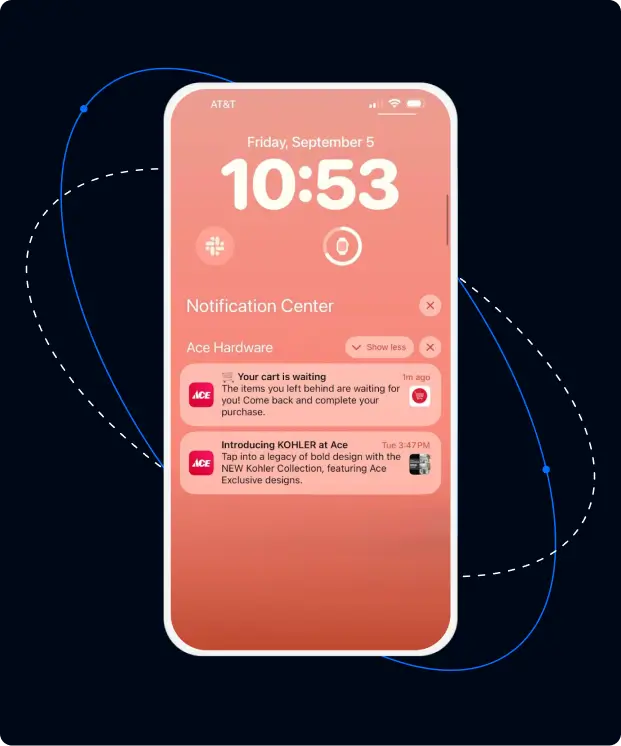
- Abandoned cart notifications: Automated push alerts triggered two hours after a user left an item in their cart to capture revenue while products remained top of mind.
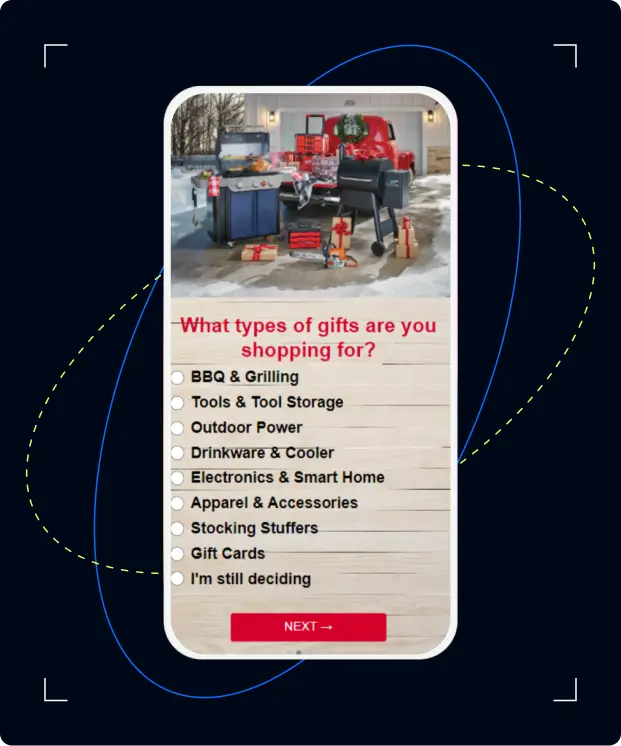
- No-code holiday surveys: A custom holiday gift guide questionnaire sourced customer wish lists, preferred brands, and target price ranges without developer support.
- Segmented contextual experiences: Zero-party data collected from the surveys triggered tailored product recommendations via push notifications and Airship Scenes.
Results
- Abandoned cart conversions: The automated push campaign achieved a 13% conversion rate, proving the business case for expanded mobile investment.
- Zero-party data scaling: The holiday gift guide questionnaire achieved a 43% survey completion rate without third-party tracking tracking.
- Higher interaction rates: Segmented messaging across push alerts and Airship Scenes drove 6x higher direct interaction than non-segmented campaigns.
ASDA
Challenge
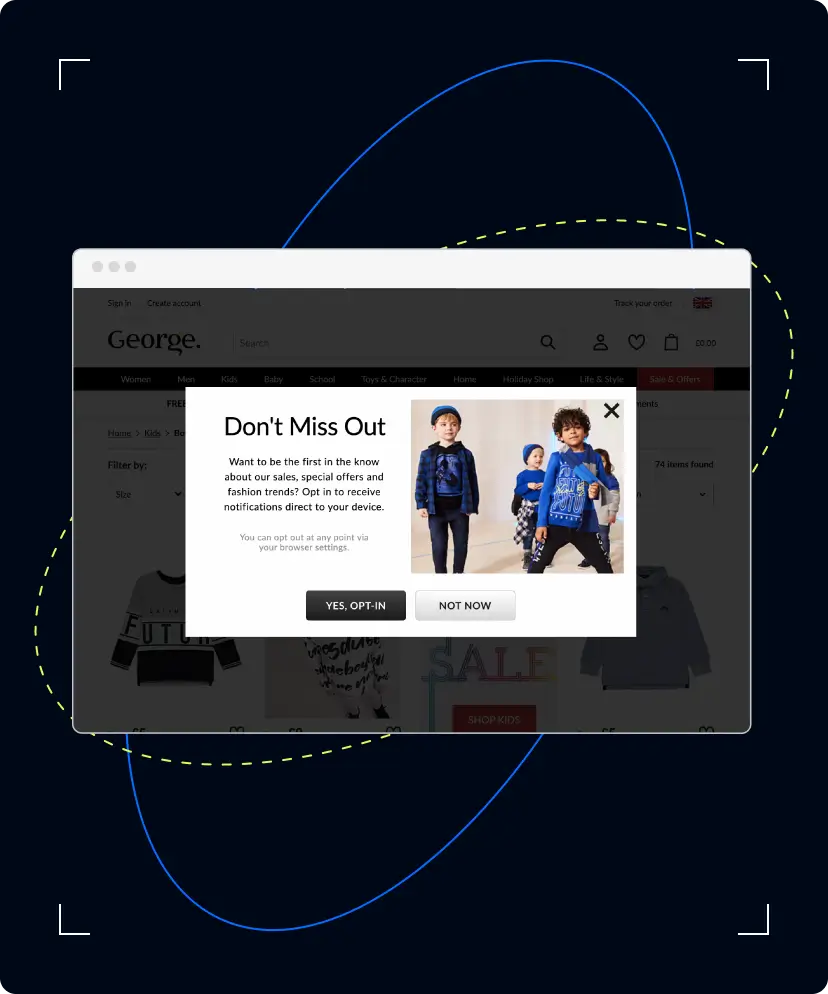
Asda experienced a 150% increase in mobile and tablet traffic to its George.com fashion retail site over four years. Rather than investing in a native mobile application, the brand focused on optimizing its web experience across all devices. The team needed a configuration to build retention and drive repeat traffic back to the digital store.
Strategy
The retailer deployed Airship Web Notifications to deliver targeted, real-time messaging directly to consumers’ web browsers.
- Value-driven opt-ins: The product team updated the browser opt-in experience using clear brand imagery and transparent value propositions to maximize subscription rates.
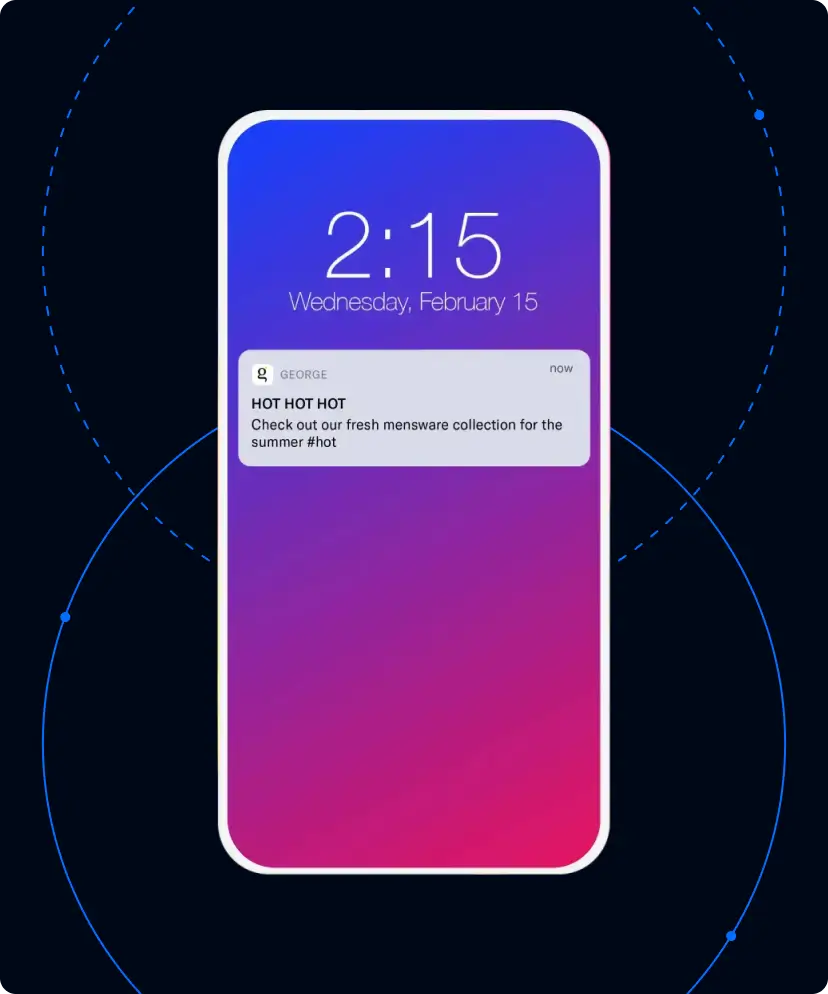
- Audience segmentation: Asda utilized filters to group shoppers by behavior, delivering tailored product updates that drove higher click-through performance.
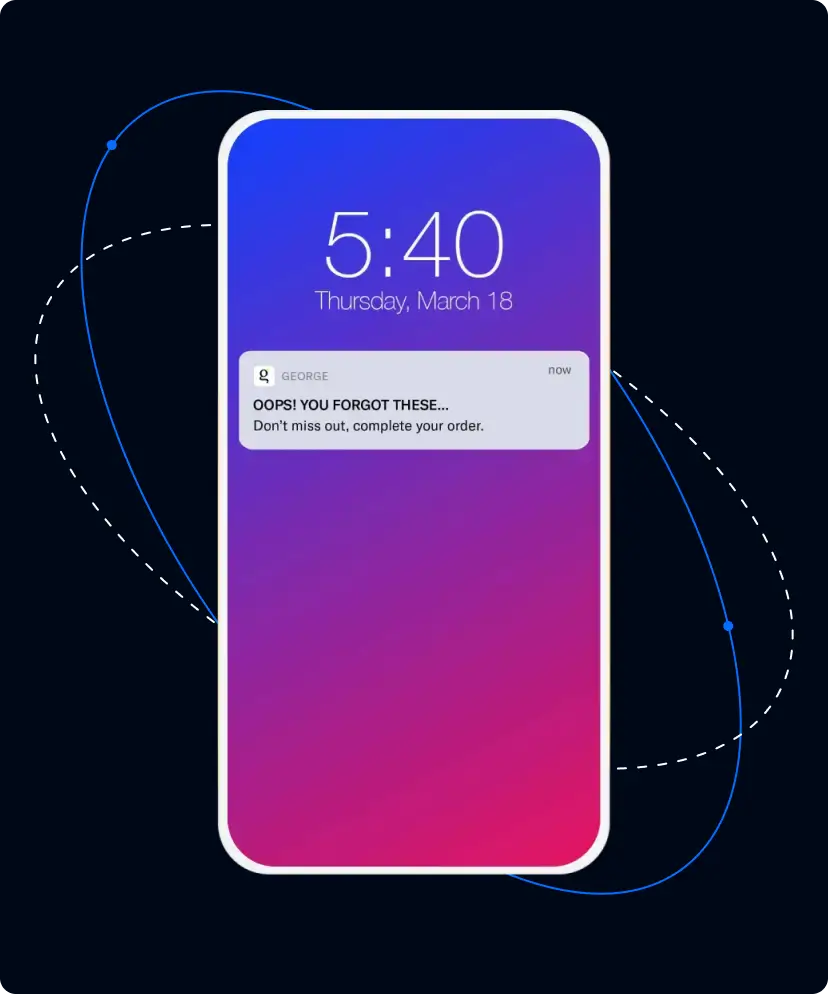
- Automated abandonment rules: The team automated browser notifications to re-engage consumers who left items behind, drawing them back into the active purchase flow.
Results
- Abandoned cart conversions: The automated web notification campaigns achieved a 40% conversion rate on abandoned shopping carts.
- Elevated purchase intent: Shoppers visiting the retail site via a web notification demonstrated a 7.2% higher conversion rate compared to users arriving via organic web search.
- Targeted campaign interaction: Delivering segmented notifications and exclusive offers directly to loyalty members generated a 27% click-through rate.
Sally Beauty and CosmoProf
Challenge
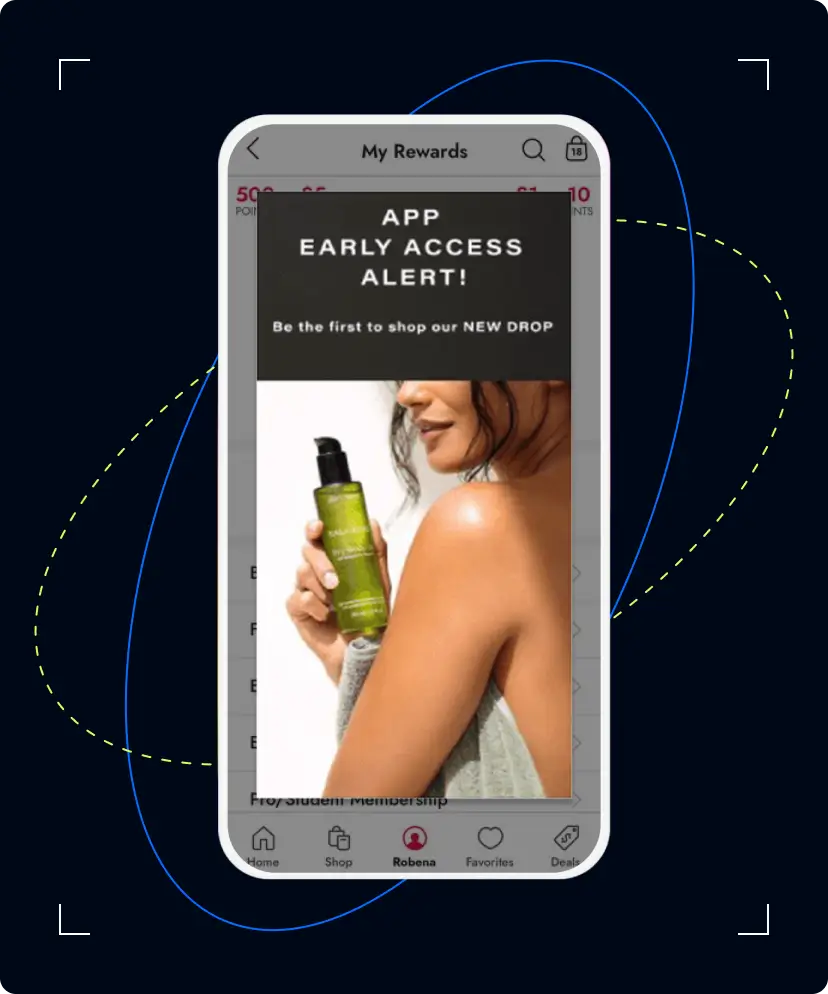
Sally Beauty Holdings set out to enhance its U.S. mobile app experiences across the customer lifecycle for its Sally Beauty and CosmoProf banners. However, the team faced strict developer resource constraints, limited bandwidth, and data accessibility hurdles, requiring an agile solution to execute campaigns independently.
Strategy
The brands deployed a phased rollout using Airship to advance their mobile app capabilities — all without overextending technical resources.
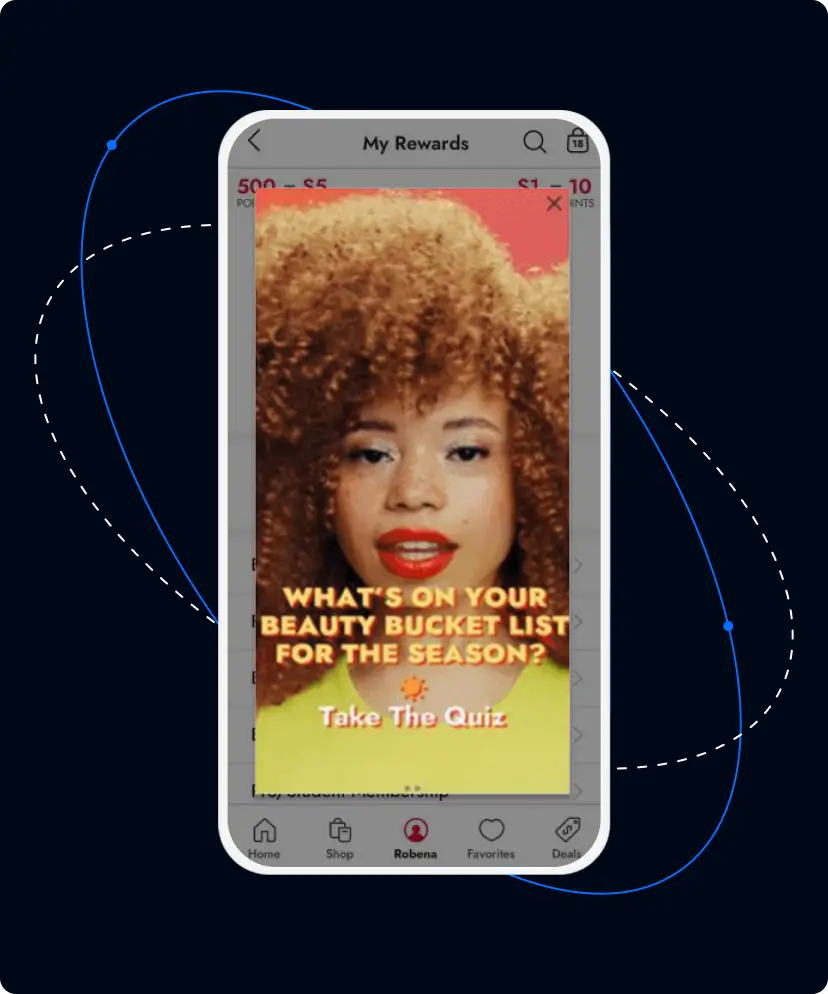
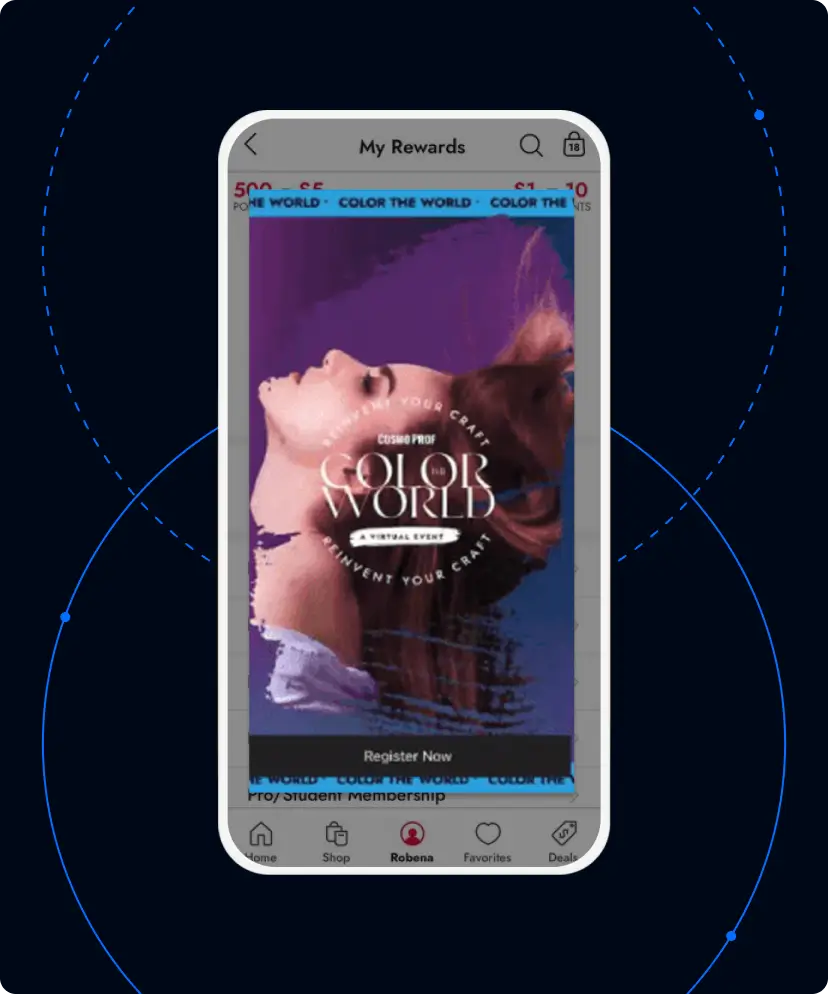
- First-party segmentation: The team utilized in-app behavior, shipping preferences, and purchase thresholds to deliver targeted, exclusive offers.
- Lifecycle automation: The brands built automated cross-channel journeys across key customer lifecycles and launched optimized abandoned cart triggers.
- Performance experimentation: The marketing team prioritized ongoing copy and image optimization alongside coordinated App Store events to reinforce the value of in-app shopping.
Results
- App revenue expansion: Sally Beauty app revenue grew from 12% to 22% of total e-commerce sales, while CosmoProf app revenue share expanded from 20% to 32%.
- Increased opt-in rates: Mobile notification opt-ins rose 15.46% year-over-year for Sally Beauty and 21.47% for CosmoProf.
- Active user growth: Active user volume climbed 7% year-over-year for Sally Beauty and 16.6% for CosmoProf.
bol
Challenge
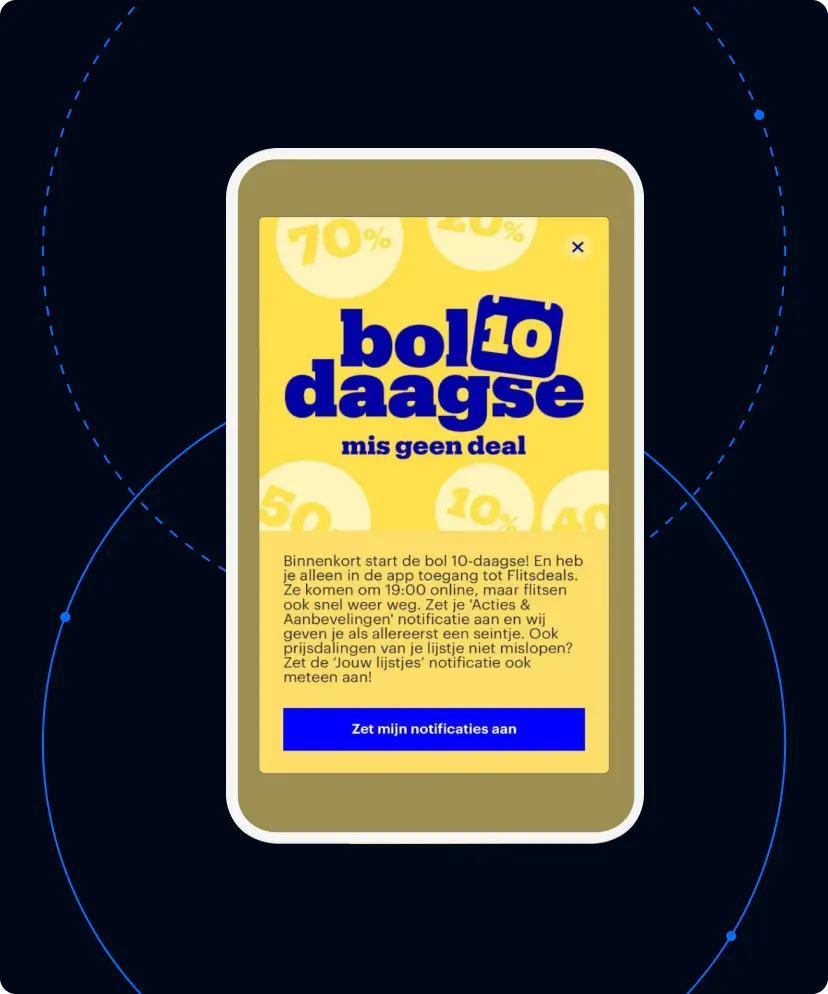
Despite recognizing the value of its app users, bol noticed a decline in new app downloads and a stagnation in push opt-ins. The online marketplace needed to showcase clear app utility to stand out from e-commerce competition while working with limited resource bandwidth.
Strategy
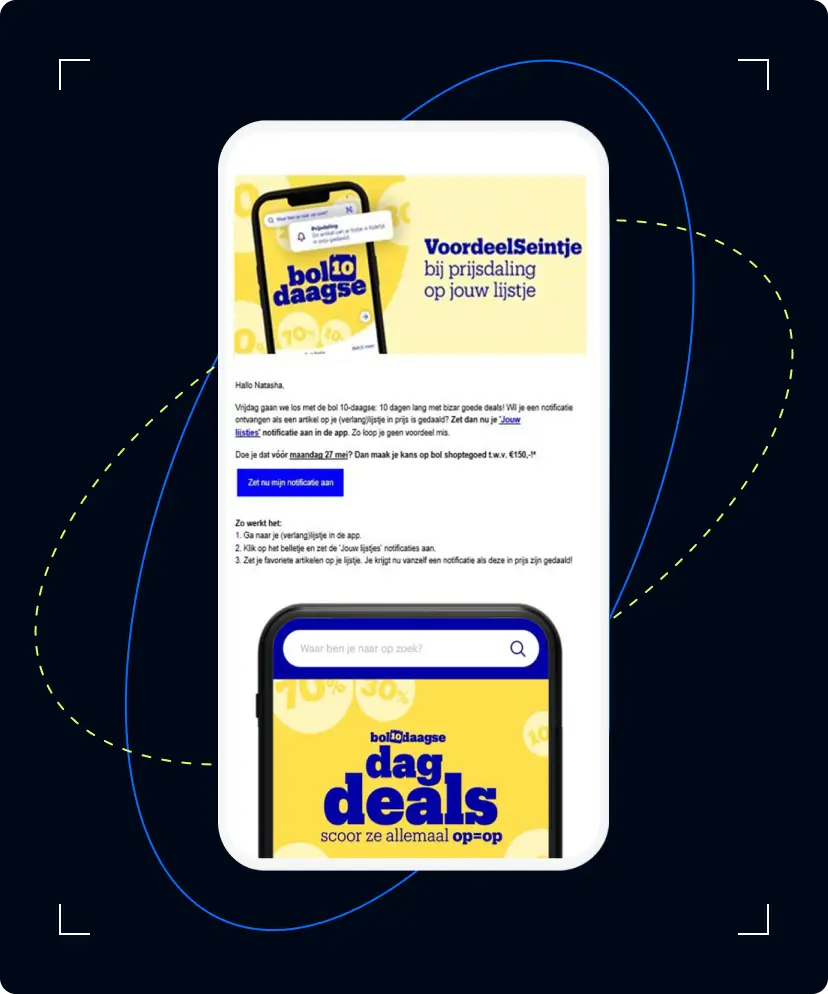
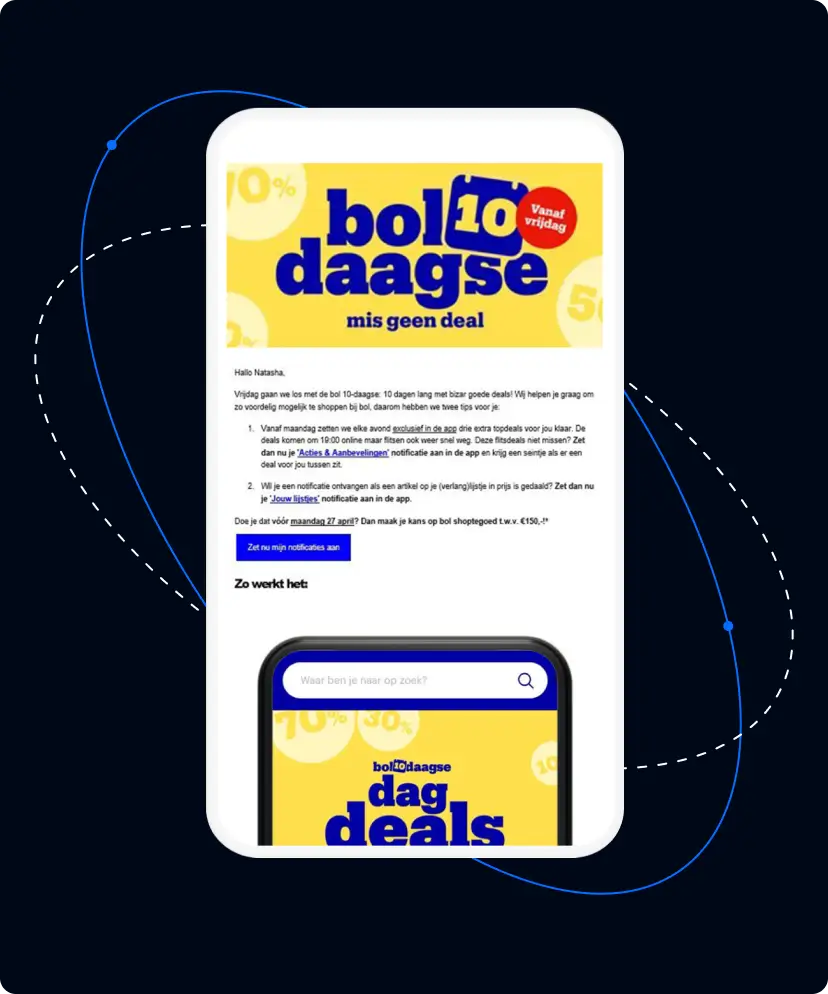
The brand scaled code-free personalization to launch a custom “Price Alert” campaign centered around customer wish lists.
- Cross-channel orchestration: Spanning email, in-app messaging, and push notifications, the team encouraged customers to share product interests in exchange for real-time discount updates.
- Automated discount triggers: The team automated notifications using backend queries that ran every hour to detect price drops, delivering tailored updates the moment a wish-listed item was discounted.
- Continuous optimization: The marketing team ran experiments on minimum discount percentages and contact frequency to optimize campaign performance over time.
Results
- Increased open performance: The multi-channel approach drove a 27% open rate, outperforming the retail average by 19%.
- Conversion uplift: Delivering tailored wish-list alerts achieved a 9% increase in conversions during the core sales campaign.
- Sustained interaction: App interaction levels remained steady even after the major sales event concluded, tracking 25% higher than pre-campaign baselines.
How to improve customer engagement in retail: Mobile-first strategies that actually work
1. Start collecting zero-party data
Relying on basic personalization alone is no longer enough to win customer attention. In fact, generic tokenization has an equal chance of harming performance — according to Airship research, basic first name placement can actually cause push notification direct open rates to drop 7x.
Moving past tracking cookies and gathering explicit preferences directly from shoppers via CX platforms like Airship allows brands to execute real value-driven targeting. Airship’s data proves this:
- 37% lift with deeper personalization: Communications tailored with insights beyond a first name see a 37% average lift in direct open rates over generic messages.
- Increased purchases: Tailoring push notifications to verified customer choices drives purchase rates up by as much as 24%.
- More active sessions: Retail apps implementing preference-driven optimization experience a 27% lift in sessions per active user over their category average.
- Boosted AOV: Average Order Value increases by 38% when consumers receive content matched to their stated choices.
2. Use intelligent cross-channel orchestration
Blasting identical marketing messages across multiple streams forces your own channels to compete for lock screen space. Retailers must utilize CX platforms that automatically route updates to the specific channel an individual consumer prefers to use, such as Airship. This coordination replaces legacy batch-and-blast methods with a single, responsive experience that honors user choice.
3. Prioritize persistent native content hubs
Over-indexing on outbound notifications frequently backfires — leading directly to communication fatigue, rapid opt-outs, and permanent app uninstalls. Retailers can protect customer attention by shifting high-value content into persistent, non-disruptive native spaces like an in-app Message Center powered by CX platforms like Airship. This allows buyers to discover promotions and updates at their own pace, keeping alerts accessible even after a push notification is swiped away.
4. Anchor the shopping journey inside a native app
A native mobile app delivers the deepest personalization capabilities and serves as the highest-conversion hub of the modern retail experience. Traditional messaging channels like email, browser alerts, and SMS should not operate as standalone communication silos. Instead, treat outbound channels as directional pathways designed to guide your audience back to the owned app environment where sustainable purchasing habits are built.
How Airship drives real results for retail brands










Airship is the only mobile-first customer experience platform that empowers retail brands to build unified cross-channel experiences and AI-powered, orchestrated journeys that drive measurable results at scale. For over 15 years, Airship has pioneered mobile innovation — with industry-first push notifications, mobile wallet passes, in-app messages, and AI agents — developing mobile expertise that is unmatched across industries and global markets.
The platform turns ordinary customer interactions into repeatable conversions by providing product, marketing, and growth teams with code-free agility. Retail leaders utilize Airship to eliminate channel fragmentation, bypass developer bottlenecks, and optimize journeys for revenue outcomes rather than activity metrics.
Thousands of top global brands trust Airship to deliver sustainable revenue growth, lasting loyalty, and clear business impact. Book a meeting with our team to discover how anchoring your customer experience strategy around mobile can optimize conversions for your retail brand.
Retail customer engagement FAQs
What are the pillars of customer experience in retail?
Modern retail customer experience relies on four core pillars: cross-channel orchestration, zero-party data collection, mobile-first app execution, and outcome-based metrics. Shifting focus away from isolated message broadcasts ensures every digital and physical touchpoint operates as a unified system. This structure transforms outbound communication into a helpful utility that respects consumer boundaries.
How do retail brands scale personalization without third-party cookies?
Why should traditional retail messaging funnel users into a native app?
A native mobile app functions as the highest-conversion environment and delivers the deepest profile customization capabilities in the retail ecosystem. Outbound messaging channels — including email, browser alerts, and SMS — should function as directional pathways rather than standalone communication silos. Funneling audiences back to an owned app environment allows brands to build sustainable, repeat purchasing habits.
What differentiates a customer experience platform from legacy customer engagement tools?
Legacy engagement tools focus on channel-centric activity — measuring success through total campaign volume and surface-level activity metrics like open rates. In contrast, a mobile-first customer experience platform orchestrates the end-to-end user journey to optimize for business outcomes like lifetime value, retention, and revenue growth. It provides product and marketing teams with code-free agility to launch optimized campaigns at market speed.