![The best retail customer engagement platforms for no-code growth teams [2026]](https://www.airship.com/wp-content/uploads/2026/06/The-best-retail-customer-engagement-platforms-for-no-code-growth-teams-2026.png)
Retail brands face a massive retention challenge. Traditional “batch-and-blast” messaging strategies drive opt-out rates and app uninstalls. Shoppers are no longer following linear pathways (in fact, the number of channels just keeps going up). And if your current tool or retail customer engagement platform is only letting you send one-off messages, you’re training customers to tune you out completely.
In this guide, I detail how product, growth, and marketing teams can move past the outdated outbound messaging playbook by selecting a retail customer engagement platform that prioritizes complete customer experiences over basic send volume.
Why legacy engagement platforms fall short in retail
1. Airship
Airship is the only mobile-first customer experience platform built specifically to drive repeatable revenue inside owned app environments. It allows product, marketing, and growth teams to manage the complete user lifecycle without burning developer resources.
- No-code native app editor: Marketers can build, test, and deploy interactive app elements — such as multi-screen stories, product onboarding paths, and surveys — without writing code or waiting on app store deployment cycles.
- Unmatched mobile depth: The platform includes native support for advanced lock screen utilities — like Live Activities and mobile wallet loyalty passes — right out of the box.
- Persistent native content hubs: High-value promotions can be routed to an in-app Message Center, ensuring updates remain accessible even after a push notification is swiped away.
- Limitations: Less suited for teams where web email remains the single dominant revenue driver, or for organizations looking for simple, basic notification triggers.
- Evolving beyond engagement: Airship positions itself as a customer experience platform (CXP), not a customer engagement platform. This is because the platform’s objective is to drive measurable outcomes — such as lifts in retention and customer lifetime value (CLV) — rather than vanity metrics such as push volume.
2. Klaviyo
Klaviyo is a popular choice for direct-to-consumer (D2C) brands, particularly those operating heavily within web-based e-commerce ecosystems like Shopify.
- E-commerce data shortcuts: The platform excels at ingesting web transactional history to trigger automated email flows based on past purchase behavior.
- Clean email design: Drag-and-drop templates make it easy to deploy traditional newsletter campaigns and web abandonment reminders.
- Limitations: Severely restricted native mobile app capabilities. Building persistent in-app messaging, interactive quizzes, or zero-party profiling forms requires substantial custom development support.
3. CleverTap
CleverTap is a data-heavy orchestration platform designed for retail operators who prioritize deep behavioral analytics and real-time user segmentation.
- Behavioral analytics engine: The platform allows teams to run complex data queries to map drop-off points throughout the digital catalog.
- Predictive personalization: Automated models can help flag groups of users who are at a high risk of churning.
- Limitations: Code-free application editing is limited. Marketing teams often face a steep learning curve and remain dependent on product developers to change actual app layouts.
4. MoEngage
MoEngage is a customer-centric platform built for growth and lifecycle marketing teams executing cross-channel communications.
- Intuitive journey mapping: A clean visual workspace makes it easy to build standard lifecycle triggers across web, email, and push pathways.
- AI-driven delivery optimization: The platform analyzes historical interaction times to automatically adjust message delivery windows.
- Limitations: Lacks an enterprise-grade native app editor. Tweak-level interface optimizations or progressive profiling surveys require engineering resources to build and ship.
5. Iterable
Iterable is an enterprise-grade platform favored by data-rich omnichannel retailers scaling massive cross-channel campaign volumes.
- Fast data ingestion: The platform easily processes large volumes of backend customer profile data from external data warehouses.
- Flexible campaign logic: Marketers can build highly customizable workflow rules for multi-step email and SMS campaigns.
- Limitations: Marketers cannot update native mobile app interfaces code-free. Retargeting options frequently prioritize the email inbox over mobile-native lock screen capabilities.
6. Braze
Braze is an enterprise customer engagement platform that excels at handling complex cross-channel campaign workflows and data orchestration.
- Robust journey building: Marketers can map multi-step campaigns across push, email, and SMS with highly customizable logic trees.
- Strong CRM integrations: The platform syncs with external data warehouses and customer data platforms to power traditional outbound marketing campaigns.
- Limitations: The tool was built to send messages rather than build actual app layouts. Modifying user interfaces, onboarding paths, or running tests requires engineering resources and app store update cycles. Mobile utilities — such as Live Activities and mobile wallet passes — are treated as add-ons rather than core capabilities.
Master your retail mobile strategy
Side-by-side platform comparison: Best retail customer engagement platforms
| Platform | Core focus | No-code app editing | Lock screen depth (wallet, Live Activities) | Primary target |
|---|---|---|---|---|
Airship | Mobile-first CX
| Strong | Native and core | App-led retail brands |
Braze | Enterprise CRM and sends | Limited | Limited | Legacy marketing teams |
Klaviyo | Web email and SMS | None | None | D2C web storefronts |
CleverTap | Behavioral data | Limited | Limited | Analytics-heavy teams |
MoEngage | Lifecycle logic | None | Limited | Enterprise email teams |
Which platform should your retail brand choose?
Your choice depends entirely on your primary growth engine. If your growth and marketing strategy relies on low-volume web transactions driven by desktop email, web-centric tools will handle the basics.
However, if your business goals rely on driving repeat purchases, maximizing lifetime value, and lowering user churn, your app must be the anchor of your strategy. Airship provides the mobile depth and code-free agility required to put customers at the center of your experience.
Book a meeting with our team to discover how anchoring your retail strategy around mobile can optimize conversions for your brand.
Retail customer experience in action: How Ulta Beauty scales mobile revenue
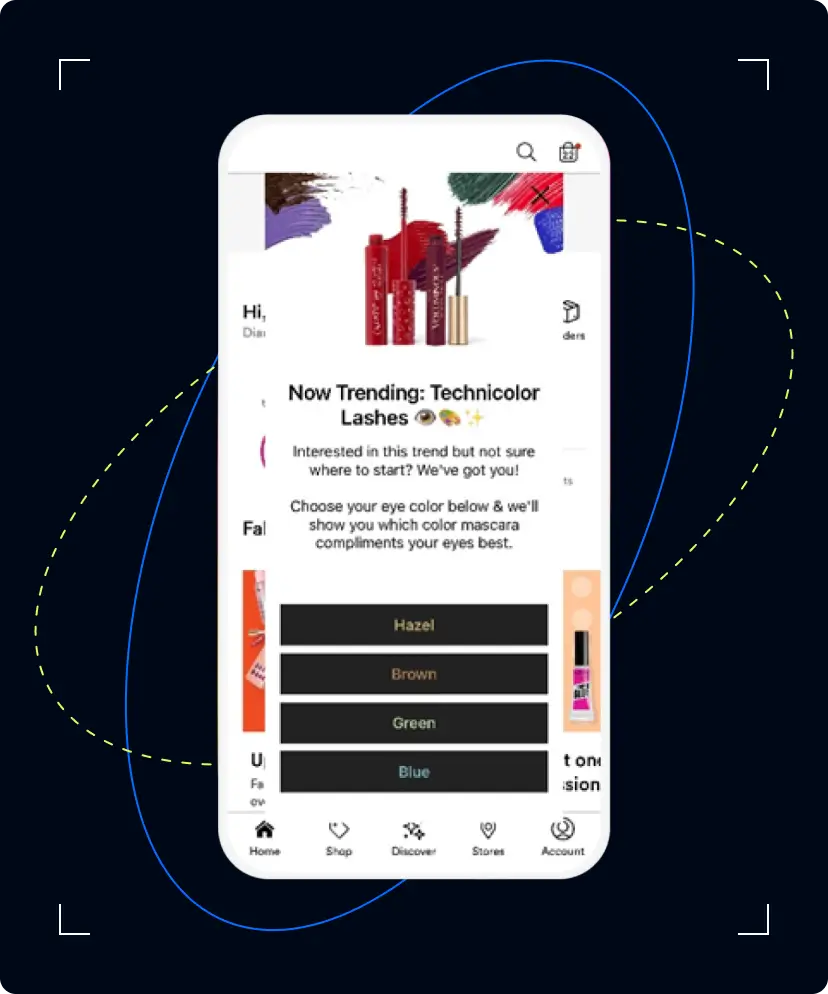
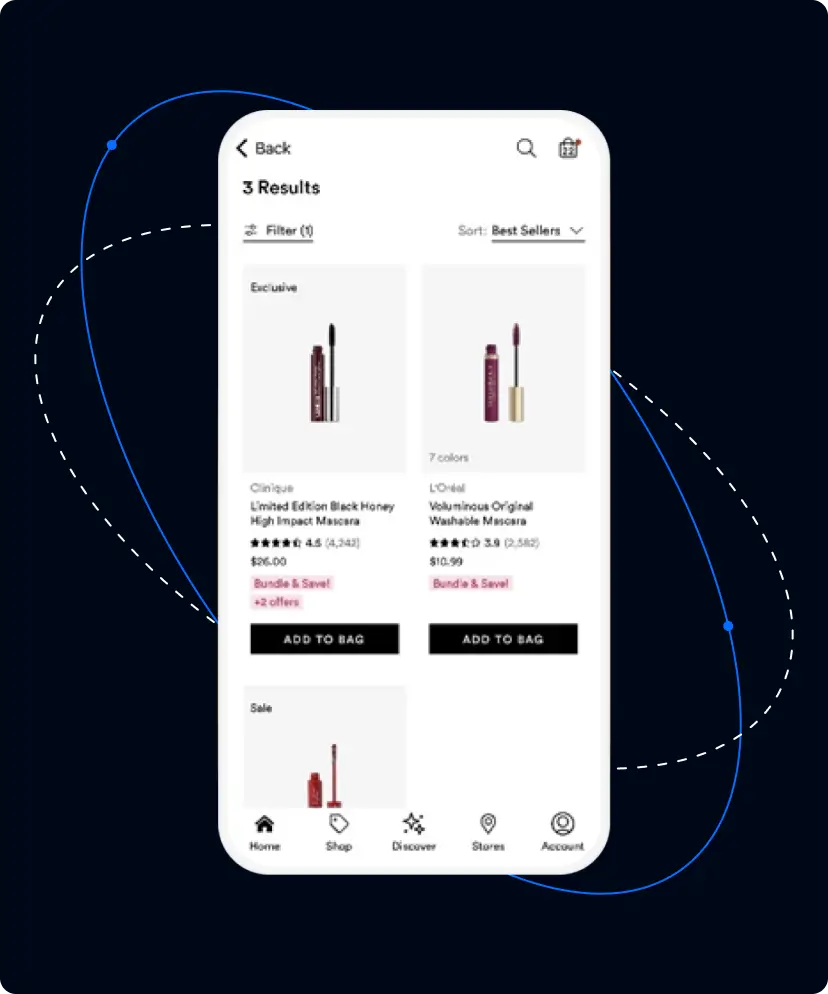

When evaluating platforms, the ultimate metric is business impact. Thousands of top brands have moved away from legacy, message-centric tools to build their strategy around Airship’s native app capabilities.
By utilizing code-free native surveys to capture explicit consumer choices, Ulta Beauty eliminated guesswork from its retargeting. Instead of blasting generic alerts, the brand delivered tailored recommendations across push notifications and app text hubs.
The strategy allowed the team to bypass engineering constraints entirely — collecting explicit preferences from over 825K guests and driving a 2.8x higher purchase conversion rate compared to traditional outbound campaigns.
How Airship drives real results for retail brands










Airship is the only mobile-first customer experience platform that empowers retail brands to build unified cross-channel experiences and AI-powered, orchestrated journeys that drive measurable results at scale. For over 15 years, Airship has pioneered mobile innovation — with industry-first push notifications, mobile wallet passes, in-app messages, and AI agents — developing mobile expertise that is unmatched across industries and global markets.
The platform turns ordinary customer interactions into repeatable conversions by providing product, marketing, and growth teams with code-free agility. Retail leaders utilize Airship to eliminate channel fragmentation, bypass developer bottlenecks, and optimize journeys for revenue outcomes rather than activity metrics.
Thousands of top global brands trust Airship to deliver sustainable revenue growth, lasting loyalty, and clear business impact. Book a meeting with our team to discover how anchoring your customer experience strategy around mobile can optimize conversions for your retail brand.
What selection criteria should enterprise retailers prioritize when evaluating customer experience software?
Enterprise retail brands must evaluate software based on native app orchestration capabilities, real-time data ingestion speed, and true code-free deployment workflows. Selecting a platform that relies on add-on extensions for mobile utilities — such as Live Activities or mobile wallet passes — drives up total cost of ownership. Procurement teams should favor software that inherently supports these lock screen touchpoints to maximize long-term retention.
Can direct-to-consumer (D2C) email marketing platforms support native mobile app journeys?
Traditional e-commerce email tools excel at web-based transactional flows but lack the infrastructure required to operate native app experiences. Attempting to force web tools into a mobile app ecosystem requires custom development support to deploy simple preference surveys or persistent in-app messaging. This setup limits operational agility and prevents growth teams from modifying layouts without running custom developer sprints.
Why do retail product managers prioritize no-code application capabilities during vendor selection?
Retail operates at incredibly fast speeds — meaning waiting on engineering cycles to correct a typo, swap out a promo banner, or launch a basic onboarding test stalls conversion workflows. Prioritizing platforms with built-in visual editors decouples front-end messaging experiences from your core app codebase. This technical separation frees up engineering resources to focus on critical product features while allowing marketing teams to optimize lifecycles independently.
What are the risks of selecting a legacy enterprise marketing suite for omnichannel retail?
Legacy enterprise suites frequently suffer from heavy technical debt, slow processing times, and siloed data architectures that require specialized administrative teams. This infrastructure forces internal growth groups to rely on engineering support to execute simple audience segments or coordinate cross-channel logic. Over time, this developer bottleneck creates a massive agility gap — leaving your brand trailing behind competitors who iterate and launch campaigns at market speed.