
Traditional growth marketing playbooks have broken down. Relying exclusively on paid media delivers diminishing returns at an unsustainable premium, driven by a 60% surge in Customer Acquisition Costs (CAC) over five years.
To protect margins, enterprise growth teams use SMS marketing to scale direct, owned communication channels. In this guide, I outline real-world workflows, compliance strategies, and frameworks required to scale text campaigns safely.
What is SMS marketing?
SMS marketing is an owned mobile strategy where companies send promotional offers, transactional alerts, and interactive content directly to a user’s native texting inbox. By utilizing cellular carrier networks instead of internet-dependent apps, SMS marketing guarantees immediate visibility.
Core pillars of SMS marketing, also known as text message marketing:
- Explicit consent: Documented, standalone opt-in confirmation is legally mandated before sending messages.
- Network independence: Messages route directly through cellular carrier networks to land on the device lock screen.
- High immediacy: The architecture prioritizes real-time delivery for operational updates and time-sensitive campaigns.
Why is SMS marketing important?
SMS marketing is important because brands require an owned channel insulated from unpredictable paid media algorithms and rising ad costs. Establishing direct communication channels stabilizes retention revenue and drives predictable long-term customer lifetime value.
Consider the four following real-world uses cases from businesses using Airship:
- A leading U.S. airline brand manages time-sensitive flight adjustments for passengers who lack cellular data or app push access.
- A top-ten U.S. quick-service restaurant (QSR) network sends automated SMS to coordinate catering requirements across store teams.
- An enterprise restaurant brand sends SMS to process instant user log-ins and verifications securely.
- A leading multi-location U.S. hair salon chain utilizes SMS to connect online appointments to in-store check-ins.
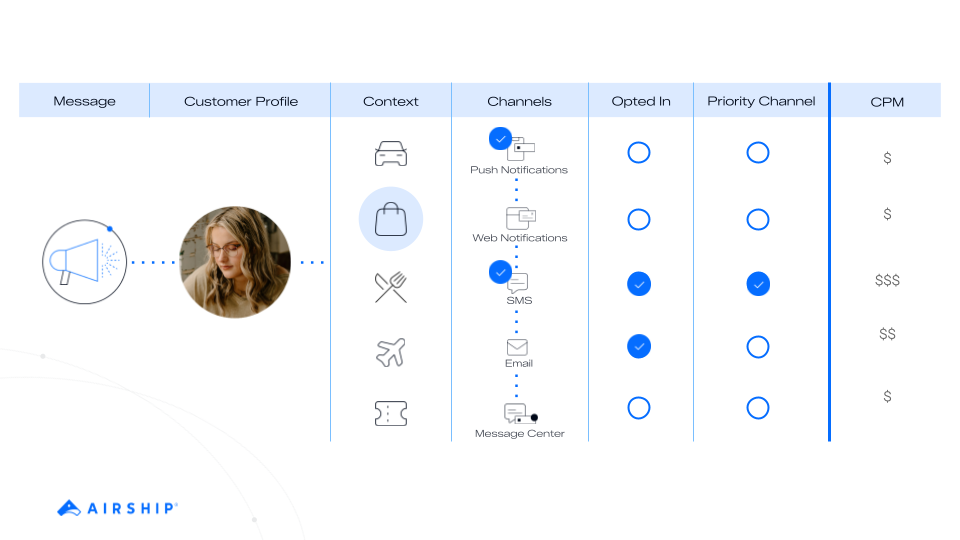
SMS is important, but in my experience, a big mistake brands make is buying a single solution tool for SMS and treating it like an isolated channel. It’s important only if it isn’t siloed and serves as one critical instrument in a larger mobile-first cross-channel strategy.
Is SMS marketing effective?
SMS marketing is effective by minimizing the risk that comes from renting audiences. Paid media channels threaten modern brand margins as customer acquisition costs rise by up to 60%.
Data highlights the massive scale of enterprise migration from paid to owned communication spaces. A joint industry study by Airship and EMARKETER reveals that brands prioritize owned channels when scaling mobile customer experience strategies:
- Email: 41.7% of brands plan to scale their use of email.
- Push notifications: 39.2% plan to expand app push messaging.
- SMS notifications: 35.0% plan to increase text message notifications.
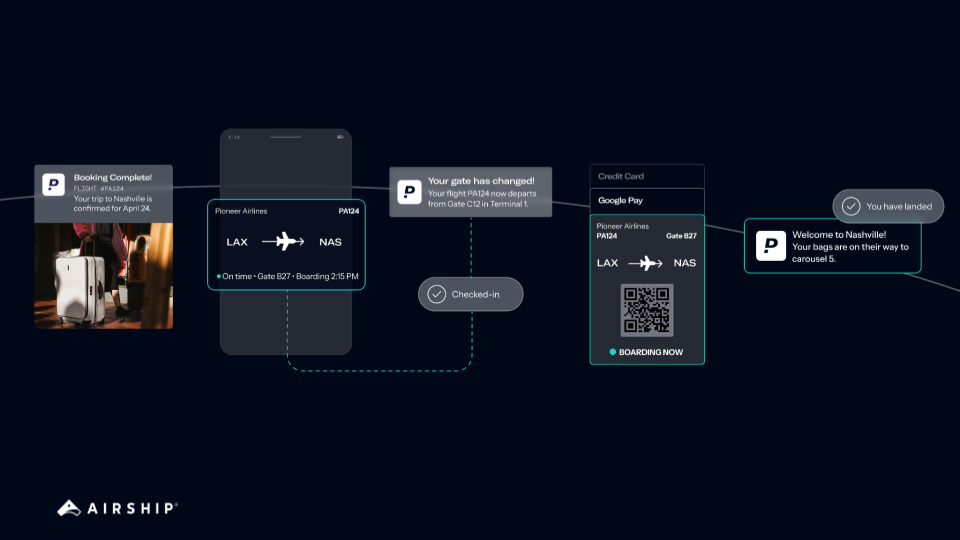
In my experience, using other channels amplifies the effectiveness of SMS marketing. For one, SMS has more limited use cases. As an example, one leading U.S. airlines company that uses Airship for mobile-first customer experiences primarily sends:
- Check-in reminders
- Flight delays
- Cancellations
- Boarding passes
- Pre-trip guidance
This airline only sends day-of-travel and what the industry calls Irregular Operations (IROP) SMS notifications. Because SMS is sacred real estate on a person’s phone, most companies we work with use SMS for essential information. They’re saving other campaigns, such as seasonal offers or surveys, for other channels. That means orchestrating different campaigns for different channels, including push, email, web, in-app, and, of course, SMS.
What are SMS marketing use cases?
SMS marketing use cases span the entire customer lifecycle, ranging from high-priority transactional alerts to targeted promotional campaigns. These direct, permission-based deployments leverage the native mobile inbox to deliver real-time operational updates, time-sensitive offers, and critical security verifications that actively protect user retention and drive immediate consumer conversions.
For large companies, text messaging is rarely a one-size-fits-all tool. In my experience, enterprise teams find the most success when they separate their texts based on the message’s goal — like an order update versus a flash sale — and the specific customer action triggering the send. To make this strategic separation work, I always recommend assigning a dedicated Sender ID — whether a short code, toll-free number, or 10DLC — to each individual messaging program.
This approach sets clear expectations, ensuring your customers know what type of content to expect from that specific number. It also prevents carrier throttling and keeps mobile networks from blocking your high-priority alerts as spam.
Most importantly, keeping these programs distinct protects your compliance data. When a user replies STOP, mobile networks apply that opt-out to the entire Sender ID. If you mix promotional and transactional campaigns on a single number, a customer opting out of a marketing blast will accidentally block critical delivery tracking or security verifications.
Here is how those core applications break down across a standard enterprise architecture:
Enterprise SMS use cases at a glance
| Use case | Core function | Enterprise example setup with Airship |
|---|---|---|
Transactional alerts | Automated, real-time operational updates triggered directly by user behavior or backend system shifts. | Real-time flight delay notifications, order shipping confirmations, and localized delivery tracking windows. |
Promotional campaigns | High-visibility, time-sensitive marketing broadcasts designed to inject urgency and drive direct conversion revenue. | VIP flash sales, seasonal product drops, and personalized milestone loyalty rewards. |
Retention and lifecycle | Targeted behavioral messaging designed to intercept attrition and re-engage lapsed or at-risk users. | Abandoned cart sequences, subscription auto-renewal reminders, and post-purchase customer feedback loops. |
Security and compliance | Instant, high-priority system-to-user transmissions required for user account protection and verification. | Two-factor authentication (2FA) passcode delivery and urgent account password reset links. |
Pro tip: Never mix your promotional marketing traffic with your critical transactional alerts on the same sending number. If an aggressive marketing push gets your number flagged by major cellular carriers, your high-priority shipping updates and fraud alerts will get throttled right along with it.
How SMS use cases shift across different industries
How high-security banking apps use native text networks as a compliance fail-safe for user identity verification
High-security banking apps use native text networks as a compliance fallback by routing automated verification tokens through SMS when data connections fail. Airship — the only mobile-first customer experience platform built for outcomes — automates this layer by triggering secure text alerts the moment an app user drops offline or leaves push notifications unread.
Key technical capabilities
- Critical fallback automated logic: The system switches communication channels dynamically based on live recipient connectivity logs.
- Identity protection standards: Secure data routing keeps financial brands compliant with digital service tracking rules without forcing heavy developer sprints.
How an insurance app leverages automated text pipelines to securely manage new client onboarding and login verification
Insurance apps leverage automated text pipelines to securely manage client onboarding and login verification by delivering automated links for document uploads. Airship infrastructure coordinates these trigger-based workflows to guide new policyholders into verification spaces inside the native app, where loyalty builds and revenue grows.
Verification execution requirements
- No-code message deployments: Product teams can launch automated onboarding texts directly using the Airship No-Code Experience Editor without waiting on standard engineering sprints.
- Explicit preference capturing: Registration steps encourage an opt-down structure via specialized app preference centers rather than binary opt-out rules.
- Downstream behavior verification: Tracking tools log policy updates and verification success rates directly against subscriber conversion files.
How a multi-location retail brand connects online appointment booking to physical front-desk check-ins using SMS
Multi-location retail brands link digital booking platforms to physical arrivals by deploying localized SMS reminders that contain automated check-in links. Airship — the only mobile-first customer experience platform that delivers measurable results through AI-powered cross-channel experiences — coordinates these journeys to eliminate channel friction. This orchestration keeps offline store visits connected to digital customer files.
Cross-channel integration workflows
- Unified profile tracking: Digital frameworks connect web booking data with mobile app user identifiers inside a single, unified platform.
- Automated arrival alerts: Real-time text notifications update local front-desk scheduling systems the moment a client touches the lock screen link.
How airlines and travel brands use SMS to send real-time flight delays and cancellation updates to passengers who don't have cellular data or push notifications enabled
Airlines use native SMS carrier networks to deliver immediate gate changes and delay updates to passengers when internet connections drop or push permissions are turned off. Airship — the only mobile-first customer experience platform trusted for mission-critical reliability — automatically routes urgent updates through text pipelines when an app user is unreachable. This fallback process protects brand reputation when seconds matter.
Operational communication fallbacks
- Real-time delivery monitoring: The platform tracks push notification status logs to detect when data connections fail or messages remain unread.
- Day-of-travel automation: System workflows trigger fallback SMS routing to ensure travelers receive critical flight details without active cellular data.
How sports and entertainment apps use real-time SMS alerts to drive last-minute ticket flash sales
Sports and entertainment apps drive spontaneous ticket sales by dispatching real-time SMS alerts that deep-link fans directly to venue seat selection maps. Airship — the only mobile-first customer experience platform focused on business outcomes — helps non-technical growth teams trigger flash sales based on live location parameters. This strategy turns unsold inventory into repeatable conversions.
Flash sale campaign requirements
- SMS deep linking: SMS notifications bypass cluttered email streams, moving recipients to specific conversion destinations within the native app.
- Explicit preference alignment: Product, growth, and marketing teams use zero-party data gathered via in-app surveys to match ticketing flash offers with favorite seating zones.
How telecom growth teams use automated SMS renewal alerts to reduce subscriber churn compared to standard email workflows
Telecom growth teams reduce subscriber churn by serving automated renewal notifications directly onto mobile lock screens, earning higher viewability than standard email. Airship — the only mobile-first customer experience platform engineered for growth — helps brands optimize retention programs by connecting text alerts to custom in-app preference centers. This configuration protects user attention from notification fatigue.
Retention campaign requirements
- Granular preference controls: Subscribers select text notifications for critical billing alerts while moving promotional messages to secondary channels.
- Persistent account access: Direct SMS links funnel users to native app subscription centers where they can handle account renewals quickly.
What are the benefits of SMS marketing?
The primary benefits of SMS marketing include exceptional message visibility, near-instantaneous audience engagement, and highly cost-effective customer retention. By delivering targeted messaging directly to a user’s cellular device, enterprise brands can drive immediate lifecycle actions and establish an owned communication channel that permanently insulates margins from rising ad acquisition costs.
To maximize this channel, enterprise product and marketing teams rely on four core strategic advantages of SMS marketing:
- High open and read rates: Achieves a 98% open rate, with 90% of messages read within three minutes. Because 68% of consumers check their texts regularly throughout the day, urgent alerts land directly on the lock screen instead of getting lost in spam filters or buried in an email inbox.
- Extreme cost-effectiveness: Provides a highly affordable alternative to traditional advertising or paid media, offering an incredibly high return on investment (ROI) by maximizing owned-channel communication.
- Universal, scalable adaptability: Tailors to any business size, customer base, or vertical market, making it an adaptable tool whether you are managing retail promotions, enterprise travel logistics, or breaking media updates.
- Long-term loyalty building: Fosters brand connections and customer advocacy through regular, personalized, and high-value touchpoints that encourage recurring business.
- Seamless cross-channel integration: Coordinates natively with email, push notifications, and social media to support a cohesive cross-channel strategy (e.g., announcing a campaign on social media and using SMS as the high-urgency reminder).
- Direct revenue generation: Capitalizes on instant visibility and the ability to deploy time-sensitive offers to immediately capture consumer intent and boost sales.
- Superior customer response rates: Generates significantly higher interactivity than other marketing channels because the native texting environment feels personal, making users far more likely to respond to surveys, claim discount codes, or complete a purchase.
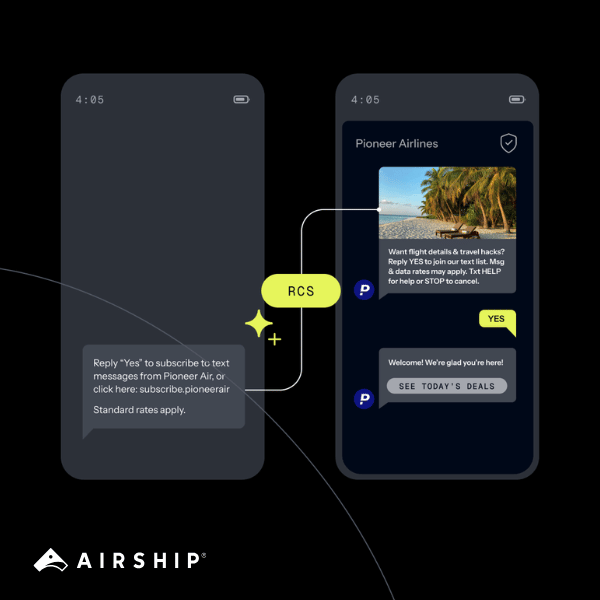
Pro tip: If you want to further optimize your SMS marketing, I suggest investing in Rich Communication Services, also known as RCS. You can deploy high-resolution carousels, videos, and action buttons, all with rich, verified branding to drive superior results.
Texting drives faster action than email
SMS drives faster consumer action because it operates on near-instantaneous visibility.
While traditional email open rates hover around 20%, data from the 2025 Consumer Texting Report indicates that overall SMS open rates reach as high as 98%. This massive engagement gap allows businesses to deliver urgent notifications directly to an active lock screen, bypassing cluttered email promotion tabs.
Reaching users who have disabled app push notifications
SMS marketing successfully reaches users independent of mobile app installations or active device notification settings.
Because SMS relies entirely on native cellular carrier networks rather than app-store frameworks, it serves as an essential fail-safe channel to deliver critical, time-sensitive alerts to lapsed users or individuals who have disabled app push notifications.
Pro tip: I find it effective to set SMS as a Fallback Channel, which Airship lets you configure on its CX platform. That way, you can re-engage users who have deleted your app or become inactive through other digital channels such as email.
Integrating SMS with email and push to maximize campaign ROI
SMS marketing optimizes cross-channel ROI by acting as the high-priority urgency layer within a broader orchestration workflow. According to Airship research, sending messages through email, SMS, and push are more cost effective than paid media, therefore improving overall campaign ROI.
Rather than broadcasting in a silo, platform logic uses SMS for immediate transactional needs, while routing long-form messaging to low-cost email and app-centric engagements to native push notifications, reducing total messaging spend.
Using SMS to capture valuable zero-party customer data
SMS marketing is highly effective for capturing zero-party data through automated keyword responses and two-way interactive text workflows. Airship research demonstrates that once a customer is recognized on an owned channel like SMS, preferences can be gathered for personalization, leading to higher potential revenue.
How to get started with SMS marketing
To start SMS marketing, enterprise organizations must select a compliant platform, secure dedicated sending numbers, build legal opt-in mechanisms, and integrate first-party customer data. Following this structured technical launch framework ensures maximum message deliverability, long-term list health, and absolute regulatory compliance across global carrier networks from day one.
Airship is the only mobile-first customer experience platform that delivers measurable results through AI-powered cross-channel experiences, allowing you to do SMS marketing and other mobile campaigns.
Following a structured launch framework ensures high message deliverability and absolute regulatory compliance from day one. Before writing copy or hitting send for your SMS advertising strategy, every enterprise brand should follow this four-step implementation roadmap:
- Select a mobile-first customer experience platform: I advise looking past standalone text applications to select an enterprise engine like Airship that coordinates text logic fluidly alongside existing app push alerts and email streams.
- Secure your sending number: Determine whether your volume requires a dedicated short code, 10-digit long code (10DLC), or toll-free number.
- Build compliant opt-in workflows: Establish explicit, standalone consent mechanisms at your digital touchpoints to capture users legally.
- Integrate customer data loops: Connect your central user database to automate hyper-relevant text triggers based on live behavior.
Step 1: Select a mobile-first customer experience platform
- Core action: Select a technology foundation engineered to handle high-volume SMS marketing, advanced compliance tracking, and dynamic cross-channel orchestration.
- Expert execution: The foundation of any successful mobile strategy is the underlying technology. Enterprise organizations must look past basic mass-texting apps and select a platform capable of handling deep data security, high-volume deliverability, and intelligent multi-channel routing alongside existing email and push notification streams. Using a mobile-first platform like Airship enables you to execute your SMS strategy while driving cross-channel campaigns that yield measurable outcomes.
As a consultant on SMS marketing, I cannot overstate the importance of a platform’s high-volume and latency capabilities. One leading retailer at Airship sends, on average:
- Over 1,500,000 messages every day
- Over 50,000,000 messages every month
Because Airship features an average uptime of 99.99%, the retailer knows it can trust the platform to deliver its SMS. When you’re sending critical alerts, like a pharmacy prescription ready alert or a time-sensitive curbside pickup notification, you need the messages to go out as soon as possible. That kind of reliability protects your brand and keeps customers loyal to you.
But an effective mobile-first customer experience strategy requires more than just SMS. Airship enables you to orchestrate cross-channel customer experiences across push, web, email, SMS, in-app, and other channels, letting you capture user attention at the right time and in the right place.
Step 2: Choose and secure your sending number type
- Core action: Establish a verified point of origin by acquiring and registering a specific number type tailored to your business model and targeted send volume.
- Expert execution: Technical teams must choose between a dedicated short code (ideal for high-volume enterprise broadcasting), a toll-free number, or a registered 10-digit long code (10DLC) for localized communications.
- Critical timeline factor: Factor carrier approval queues into your launch roadmap. While a standard toll-free number can be verified in a few days, provisioning a dedicated enterprise short code or registering a 10DLC campaign route can take weeks due to strict regulatory timelines.
Step 3: Build compliant, legal opt-in workflows
- Core action: Build explicit, standalone consent workflows across your digital touchpoints to capture users legally and transparently.
- Expert execution: Because text messaging is strictly regulated by mobile carriers and federal laws like the TCPA, you cannot buy contact lists or automatically text existing users. You must build clear, explicit consent checkboxes into checkout lines, sign-up forms, and app interfaces, giving users complete transparency over what they are subscribing to.
- Compliance baseline: Leverage a platform like Airship to build a successful SMS marketing program that inherently supports compliance with shifting laws and industry best practices.
Step 4: Integrate customer data and automate your triggers
- Core action: Connect your central user database to automate hyper-relevant text triggers based on live, real-time consumer behavior.
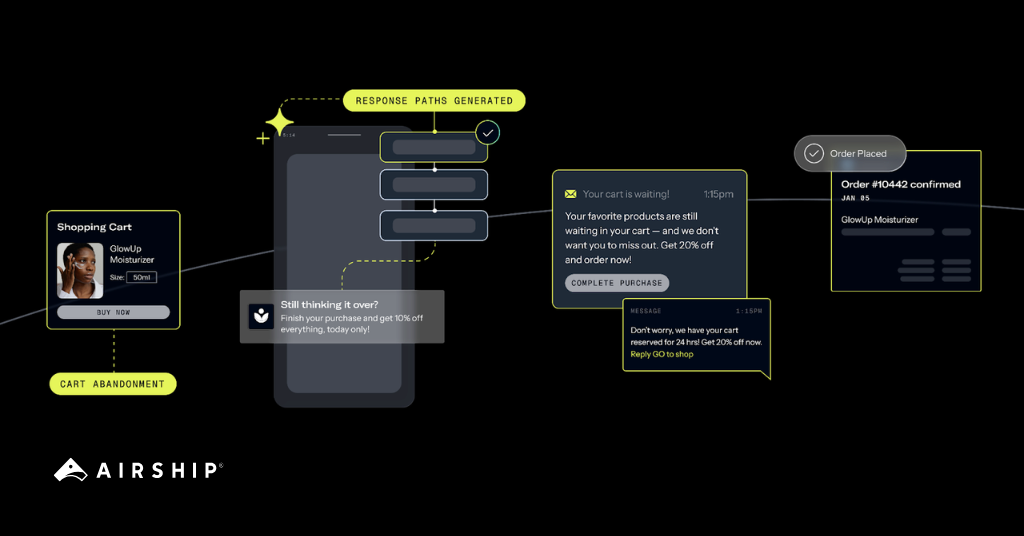
- Expert execution: The final step is moving entirely away from generic, manual batch-and-blast messaging. By feeding live customer data — such as purchase history, app behavior, or location triggers — directly into your SMS platform, your growth team can automate high-value, personalized campaigns like abandoned cart reminders or contextual shipping notifications right when they matter most.
SMS compliance: How to follow regulations for text message marketing
Implementing a successful SMS advertising campaign involves more than just creating captivating messages. It’s crucial to understand and follow the legal requirements that govern SMS communications.
Compliance helps you avoid legal fees. More than that, it builds trust with your audience and maintains a positive brand reputation. Here are some SMS marketing best practices to consider when it comes to compliance.
TCPA and other compliance considerations
Before implementing a successful SMS marketing strategy, you must understand SMS laws. In the US, for example, SMS is regulated under the Telephone Consumer Protection Act of 1991, or TCPA, created to protect consumer privacy. Whereas in Europe, SMS marketing falls under the General Data Protection Regulation (GDPR) and the ePrivacy Directive.
Other countries have specific laws that regulate SMS as well.
If you want to take your SMS marketing strategy abroad, read up on how to implement a successful international SMS strategy.
Opt-in and opt-out management
The TCPA requires companies to present potential customers with an express opt-in so they aren’t spammed with unwanted SMS messages at all hours of the day. Companies must receive consent before engaging in SMS messaging, or they will face significant fines.
Opt-in and opt-out records and reporting make it easy to manage compliance with applicable SMS regulations. Brands can work with an SMS text marketing service vendor like Airship to maintain an opt-in and opt-out database that:
- Is segregated from campaign content
- Tracks both opt-in and opt-out dates and deactivated numbers, and maintains this information for four years
- Supports data subject rights under GDPR
Brands should always consult with their legal/compliance departments to choose the best way to secure the consent necessary to send SMS and MMS messages.
For opt-ins, Airship’s CX platform supports:
- Double opt-in via mobile phone opt-in
- Double opt-in for non-mobile phone opt-in
- Brand-managed opt-in via an API
- Opt-in owned by a brand and uploaded to a provider via CSV
For opt-outs, the Airship CX platform supports:
- A mobile device-originated opt-out request: When a consumer texts the brand with a keyword like STOP.
- An opt-out via website or app: If a consumer changes their preferences in a Preference Center — or in some other way via the brand’s website or app.
- A carrier deactivation handling: Mobile network operators (like AT&T, Verizon, etc.) provide a list of deactivated phone numbers on a daily basis. These numbers should be automatically uninstalled (and removed from the database entirely), so brands don’t inadvertently message the wrong person if that number gets reassigned.
It is a best practice not to send messages to numbers that have opt-out dates associated with them. If a consumer opts out but then decides to opt in again, the “double opt-in” or “brand-managed opt-in” methods described above will register a new opt-in date.
How to choose an SMS marketing platform
To choose an SMS marketing platform, enterprise brands must evaluate software based on data autonomy, cross-channel orchestration capabilities, and compliance infrastructure. Rather than selecting a vendor based on isolated text delivery rates, organizations should prioritize solutions that integrate directly into their first-party data ecosystems to secure true audience ownership.
To help organizations look past basic feature checklists, I recommend product, growth, and marketing teams ask the following questions:
- Does the platform ingest live, first-party user behavior natively, or are you stuck constantly batch-uploading static CSV files?
- Does the platform treat SMS as an isolated island, or can it dynamically coordinate with your app push notifications and email streams?
- Do you own your sending identities, short codes, and keyword forwarding pipelines natively, or are they locked into a vendor’s restrictive, proprietary infrastructure?
Airship delivers on all three pillars.
- Our real-time SDKs eliminate static CSVs for instant data liquidity.
- Through Airship Journeys, the platform acts as a cross-channel brain, coordinating text with push and email to maximize campaign ROI and reduce costs.
- Finally, the Airship platform secures your infrastructure with dedicated sender provisioning and automated keyword compliance. Airship unifies data, orchestration, and delivery so you fully own your audience.
The takeaway: Choosing a point-solution SMS vendor inevitably creates technical debt and fractured customer experiences. By unifying your data, orchestration, and delivery under a single roof, Airship ensures you stop renting access from third-party networks and start fully owning your audience relationships.
How to measure the impact of SMS marketing on sales?
To measure the impact of SMS marketing on sales, businesses must track direct and indirect attribution metrics tied to text campaigns. By utilizing custom UTM-tracking links, campaign-specific discount codes, and precise conversion windows, organizations can accurately isolate the exact revenue, conversion rates, and long-term customer value driven by the SMS channel.
Tracking sales impact at the enterprise level goes far beyond looking at basic open rates. Because SMS is a high-urgency channel, its influence on consumer behavior is rapid and direct.
Which metrics do I use for SMS marketing?
The metrics you should use for SMS marketing are ones that prove the financial return on your investment. Start by prioritizing these core sales and performance metrics:
- SMS-Attributed Revenue: The total dollar value of purchases directly tied to an SMS campaign within a defined attribution window (typically 24 to 72 hours post-delivery).
- Conversion Rate (CR): The percentage of text recipients who clicked a link within the message and successfully completed a purchase or desired action.
- Click-Through Rate (CTR): The proportion of delivered messages that resulted in a user clicking an embedded link, which serves as a primary indicator of offer relevance.
- Cost Per Acquisition (CPA): The total financial spend of an SMS campaign divided by the number of paying customers acquired through that specific send.
- Revenue Per Message (RPM): Total revenue generated by a campaign divided by the total number of text messages sent, showing the baseline profitability of each send.
- Subscriber Opt-Out Rate: The percentage of users who reply “STOP” or unsubscribe after a campaign. Tracking this alongside sales ensures your promotional frequency isn’t burning out your list.
- Long-Term Customer Lifetime Value (LTV): Monitoring the ongoing spend of users opted into SMS versus those who are not, proving how the channel impacts repeat business over time.
Pro tip: To accurately isolate SMS revenue, use clean room promotional codes that are completely exclusive to your text messaging channel. If you reuse the same discount code across your email list or social media accounts, your attribution data will become muddy and unreliable within 24 hours.
Real-world SMS marketing case studies
SMS marketing case studies demonstrate how real-world enterprise brands leverage high-throughput text messaging to solve complex communication challenges. By reviewing actual data from industry leaders, organizations can understand how combining low latency with intelligent cross-channel orchestration directly improves operational efficiency, customer retention, and immediate mobile engagement at scale.
To see this infrastructure in action, look at how four massive enterprise brands use Airship’s mobile-first, cross-channel CX platform to power their high-volume, time-sensitive mobile messaging pipelines:
1. Airline travel logistics
A prominent U.S. airline brand leverages text channels to manage time-sensitive flight adjustments for active passengers who lack cellular data or app push access.
- The scale: Deploys 150,000 messages daily and 3,000,000 messages monthly to active travelers.
- Core use cases: Flight delays, cancellations, check-in reminders, pre-trip guidance, and digital boarding pass delivery.
- Infrastructure retention: The brand has utilized a unified cross-channel framework (combining mobile wallet and text) for over 5 years.
- Speed benchmarks: Real-time updates achieve a P99 latency of less than 98 seconds. Ninety percent of messages clear carrier networks in under 3 seconds, and 95% deliver in under 5 seconds.
2. QSR internal operations routing
A top-ten U.S. quick-service restaurant (QSR) network deploys automated text tracking to coordinate complex catering requirements across decentralized store teams.
- The scale: Routes 75,000 daily messages and 2,200,000 monthly messages directly to internal teams.
- Core use cases: Real-time catering order updates, localized system order status changes, and time-sensitive delivery updates.
- Infrastructure retention: The brand has run its internal communications on an integrated customer experience stack for over 11 years.
- Speed benchmarks: Critical operational routing maintains a P99 latency of less than 65 seconds. Team alerts boast a P90 transmission speed of 3.2 seconds and a P95 delivery speed of 5.2 seconds.
3. Mass Two-Factor Authentication (2FA) identity security
An enterprise restaurant brand scaled specialized text pipelines to process instant user log-ins and verification metrics securely.
- The scale: Delivers over 4,000,000 security messages in a compressed 30-day window.
- Core use cases: Automated two-factor authentication (2FA) passcode delivery.
- Infrastructure retention: The organization has scaled its security architecture alongside its digital push notification strategies for over 7 years.
- Speed benchmarks: Achieves a median delivery time of 0.471 seconds , with a P99 latency of under 34 seconds. Ninety percent of codes land in 3.1 seconds, and 95% arrive within 4.9 seconds — ensuring 100% of passcodes clear long before the brand’s strict 5-minute expiration window.
4. Retail front-desk and guest management
A leading multi-location U.S. hair salon chain utilizes text tracking to connect online appointments to in-store counter check-ins.
- The scale: Drives 65,000 daily messages and 1,600,000 monthly updates to retail clients.
- Core use cases: Double opt-in text collection upon counter check-in, real-time queue tracking notifications, and post-service automated list opt-outs.
- Infrastructure retention: The salon chain has leveraged an enterprise-grade mobile wallet and messaging framework for over 11 years.
- Speed benchmarks: Arrival notifications maintain a P99 latency of less than 23 seconds. Real-time communication paths feature a P90 delivery speed of 3.1 seconds and a P95 speed of 4.8 seconds.
Why you need a mobile-first CX strategy
SMS marketing FAQs
What is the difference between SMS marketing and push notifications?
SMS marketing delivers text messages via cellular networks directly to a phone number without requiring an app installation. Conversely, push notifications send digital alerts over the internet through a native mobile application, meaning the user must have the app installed and notifications enabled.
What are the primary compliance rules for SMS marketing?
SMS marketing compliance requires businesses to secure explicit, documented opt-in consent from consumers before sending automated text messages. Under legal frameworks like the TCPA, brands must provide transparent disclosures regarding message frequency and clear, instant opt-out mechanisms.
To remain compliant, text message consent must be collected as a standalone choice rather than bundled into standard checkout terms. Additionally, sending platforms must automatically recognize and execute universal compliance keywords like STOP or HELP to avoid severe carrier penalties and legal fines.
What is a 10DLC number versus an enterprise short code?
A 10DLC (10-Digit Long Code) is a standard, localized business phone number approved by carriers for moderate-volume messaging. An enterprise short code is a specialized 5-to-6-digit number engineered specifically for high-throughput, high-volume broadcasting without carrier throttling.
Brands utilize 10DLC numbers when they want a cost-effective, local identity for customer service or moderate transactional workflows. Dedicated short codes are an enterprise asset required for national marketing campaigns, flash sales, or critical alerts where thousands of texts must hit devices simultaneously.
How do you prevent SMS subscriber burnout and high opt-out rates?
Brands prevent SMS subscriber burnout by implementing platform frequency caps and prioritizing behavior-driven relevance over repetitive broadcasting. Because text messages trigger immediate lock-screen notifications, keeping content highly contextual naturally stabilizes opt-out rates.
The best way to protect your list is through smart cross-channel orchestration. By setting platform logic to route non-urgent updates to low-cost channels like email or app push first, you can reserve premium SMS alerts strictly for high-urgency, high-value interactions.
How much does SMS marketing cost?
SMS marketing costs between $0.01 and $0.05 per text message sent, combined with a software platform fee that typically ranges from $50 to $500+ per month depending on your subscriber volume.